Saturday, February 28, 2026

Is Cannabis a Remedy for Anxiety?

2017mjanxiety

Risks of Using Marijuana to Deal with Anxiety

The association between cannabis and depression: an updated Systematic Review and Meta-analysis

The association between cannabis and depression: an updated Systematic Review and Meta-analysis - PMC https://pmc.ncbi.nlm.nih.gov/articles/PMC12055028/

Down and High: Reflections Regarding Depression and Cannabis

Heavy Cannabis Use Is Associated With Low Bone Mineral Density and an Increased Risk of Fractures

Heavy Cannabis Use Is Associated With Low Bone Mineral Density and an Increased Risk of Fractures - The American Journal of Medicine https://www.amjmed.com/article/s0002-9343(16)30851-8/fulltext

Friday, February 27, 2026

NCAA FB CHANGING PLAYING RULES

Sean McAndrews, MA
Associate AD Senior Compliance, Administration
3047664122 office
West Virginia State University
MEC CHARTER MEMBER

https://ncaad2rules.blogspot.com/


"Never Delay Gratitude"

Skip Prosser


Please report IT, COL and Physical Facilities issues by sending an email with complete information to the appropriate address:

Must Employers Hit the Mute Button on Employee Activism?


---------- Forwarded message ---------
From: Steptoe & Johnson PLLC <info-steptoe-johnson.com@shared1.ccsend.com>
Date: Fri, Feb 27, 2026 at 9:33 AM
Subject: Must Employers Hit the Mute Button on Employee Activism?
To: <mcandrse@wvstateu.edu>


Must Employers Hit the Mute Button on Employee Activism? 

Details


In the wake of political unrest on immigration issues, division across the nation following the Charlie Kirk assassination, and the recent discipline of a Ford Motor Co. employee for calling President Donald Trump a "pedophile protector," perhaps a refresher on employee speech and activism is in order.


While free speech under the First Amendment is a fundamental right, it is not unlimited. Often employees do not realize their First Amendment rights do not extend to the private employment setting. Indeed, a private employer can discipline or terminate an employee for their speech — on-site or off-site, during or outside working hours — as long as the employer does not violate some other state or federal law (i.e., most states prohibit adverse action against an employee when the action violates an explicit public policy, and the National Labor Relations Act (NLRA) prohibits employers from taking adverse action against employees for concerted activity or discussing working conditions).


In recent history, private employees may have expressed opinions on COVID-19 vaccinations; diversity, equity, and inclusion; climate change; the #MeToo movement; Black Lives Matter (BLM); and countless other social justice or politically charged topics. And in cases where litigation or publicity followed an employer's attempt to limit employee speech on those topics, the inquiry was often fact-driven and circumstantial, sometimes with perplexing and conflicting outcomes.


For instance, one federal court held Whole Foods did not violate Title VII when it told its employees they could not wear masks and apparel referring to the BLM movement while at work. However, the National Labor Relations Board concluded Home Depot violated the NLRA when it discharged an employee for refusing to remove the hand-drawn letters BLM from his work apron. While the NLRB's decision was later overturned, the extensive litigation of these issues illustrates the complexity and nuance involved in evaluating whether to discipline an employee for their speech.


The expansive use of social media further complicates a private employer's calculus when evaluating whether to discipline an employee for speech. In one highly publicized example of employee discipline for online speech, Juli Briskman, a marketing analyst for a federal government contractor, was terminated for violating a company policy that banned obscene content on social media when an image of Briskman holding up her middle finger while a presidential motorcade drove past her in 2017 went viral. Briskman was not identified until she herself acknowledged online that she was the woman in the photo. She filed suit in Virginia, arguing her off-duty speech was protected, but her suit was dismissed because she was an at-will employee and First Amendment rights did not apply in the private sector.


Moreover, under the First Amendment, "speech" is not limited to an employee's use of words. Speech can include displaying symbols, attendance at a protest, running for public office, or physical gestures (e.g., an employee's termination for allegedly using a "white power" gesture while driving a company vehicle). In fact, "speech" can be demonstrated in an employee's silence, such as refusing to participate in an employer-sponsored activity.


While the general rule holds private employee speech is not protected and employers retain broad discretion to discipline employees for their speech, context is key. Here are some guidelines for employers to consider.


First, is there a state or local law that protects employees' political action or off-duty conduct? Could the private employee speech at issue qualify as concerted activity such that it is protected under the NLRA? Note that criticism of an employer or its management may be protected when the communication is considered an attempt to garner support or rally others if the speech is not "malicious or reckless." For online speech of private employees, is there a state or local law prohibiting employers from requesting access to employee social media accounts (e.g., Maryland Law §3-712 and Virginia Code §40.1-28.7:5)?


Second, does the private employee's speech violate any anti-discrimination or anti-harassment laws, even if the speech was made entirely off-site and outside working hours? If the employee's speech threatens or incites violence, discipline is almost always warranted. If the private employer considers the speech disruptive but not threatening, a closer analysis is required. An employee's speech can disrupt the workplace, but the employee's public speech can also be disruptive outside the workplace, either reputationally or by disclosing confidential information. Either way, employers should address these issues consistently to avoid disparate treatment of similar speech.  


Private employers should implement or update policies regarding employee conduct, dress codes, absenteeism, social media use, and harassment, and they should educate employees about those policies. Even in the absence of clear policies, as noted above, private employers should maintain consistency in administering discipline based on employee speech. And documentation of the issue is critical to protect against any claim of harassment or discrimination based on a private employer's treatment of employee speech.


In sum, private employers generally can regulate employee speech and activism and can discipline or terminate employees for their speech. However, in most cases, legal counsel should be consulted to ensure a robust analysis of the potential risks when employee speech is involved.


Please reach out to the author with any questions or assistance needed on this matter.

Author

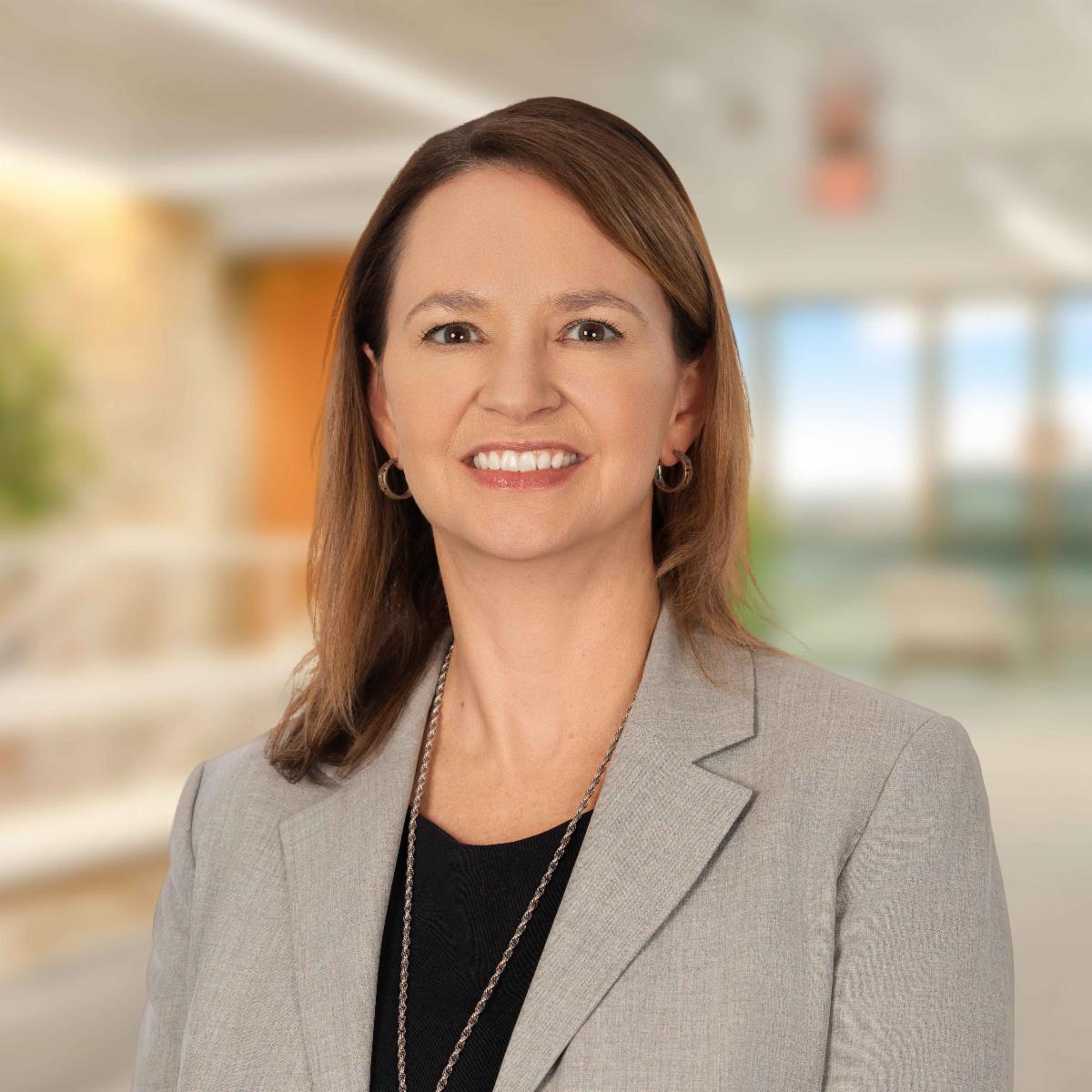
Ashley Hardesty Odell

Member | Labor & Employment


(304) 598-8150

Click Here to Email

Copyright © 2026 Steptoe & Johnson PLLC. All Rights Reserved.

These materials are public information and have been prepared solely for educational purposes. These materials reflect only the personal views of the authors and are not individualized legal advice. It is understood that each case is fact-specific, and that the appropriate solution in any case will vary. Therefore, these materials may or may not be relevant to any particular situation. Thus, the authors and Steptoe & Johnson PLLC cannot be bound either philosophically or as representatives of their various present and future clients to the comments expressed in these materials. The presentation of these materials does not establish any form of attorney-client relationship with the authors or Steptoe & Johnson PLLC. While every attempt was made to ensure that these materials are accurate, errors or omissions may be contained therein, for which any liability is disclaimed.
Steptoe & Johnson PLLC

Steptoe & Johnson PLLC | 400 White Oaks Boulevard | Bridgeport, WV 26330 US

Unsubscribe | Update Profile | Our Privacy Policy | Constant Contact Data Notice

Constant Contact

Thursday, February 26, 2026

SEC - BIG 10 WHITE PAPER ON MEDIA RIGHTS

https://www.cbssports.com/college-football/news/big-ten-sec-congress-fbs-broadcasting-rights/

Tuesday, February 24, 2026

Thursday, February 19, 2026

202526 FAN GETS ARRESTED - WV HS GBB GAME

The Litigation Portal: Legal and industry experts analyze unprecedented lawsuits between universities and college athletes

I will be posting the link to the podcast

You will have to listen to the podcast to complete the Case Analysis

Sean McAndrews, MA
Associate AD Senior Compliance, Administration
3047664122 office
West Virginia State University
MEC CHARTER MEMBER

https://ncaad2rules.blogspot.com/


"Never Delay Gratitude"

Skip Prosser


Please report IT, COL and Physical Facilities issues by sending an email with complete information to the appropriate address:


---------- Forwarded message ---------
From: The Drake Group Education Fund <julie@thedrakegroupeducationfund.ccsend.com>
Date: Wed, Feb 18, 2026 at 7:47 PM
Subject: The Litigation Portal: Legal and industry experts analyze unprecedented lawsuits between universities and college athletes
To: <mcandrse@wvstateu.edu>


Webinar Series – Critical Issues in Collegiate Athletics

Thursday, February 19, 2026 – 2:00-3:30 p.m. ET

Webinar #54

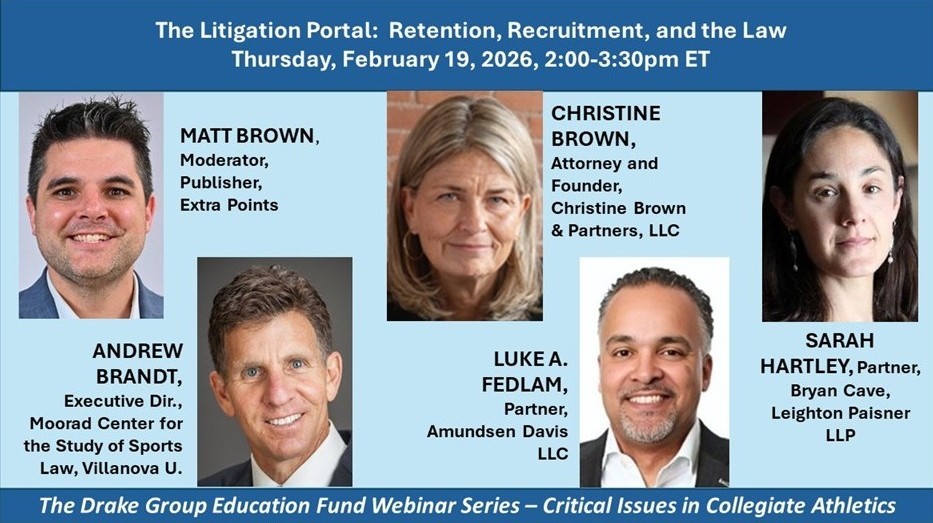
The Litigation Portal: Retention, Recruitment, and the Law

REGISTER HERE

Moving beyond "Wild West" clichés, this webinar examines the shift in collegiate athletics toward a litigious landscape governed by contract law and revenue-sharing. As we head into 2026, legal and industry experts will dissect the rise of "tortious interference" lawsuits between universities, as well as the unprecedented legal battles between institutions and their own athletes over contract enforcement. By analyzing the tension between an athlete's freedom of movement and the need for educational stability, this session identifies the systemic risks facing institutions that must now balance aggressive athletic recruitment with their core educational mission and the long-term success of their students.


CLOSED CAPTION FEATURE AVAILABLE FOR ALL WEBINARS

MEET OUR MODERATOR AND PANELISTS


MATT BROWN, Publisher, Extra Points. Extra Points is a newsletter covering business, policy, and off-the-field issues in college athletics. Brown has covered NIL, athlete labor movements, college athletics legislation, NCAA governance, and other related issues for several years. Brown also created 'Athletic Director Simulator 4000", a simulation computer game used by thousands of college students to help demonstrate what running a D-I athletic department is really like. Prior to starting Extra Points, Brown ran college team site programming at SB Nation, and is the author of "What If? A Closer Look at College Football's Great Questions." Brown lives in Chicago.


ANDREW BRANDT, Executive Director, Moorad Center for the Study of Sports Law, Villanova School of Law. Brandt is a premier sports legal and business expert with over 25 years of experience across the NFL, media, and academia. Currently a Professor of Practice and Executive Director of the Moorad Center at Villanova, Brandt is a recognized thought leader in sports policy and athlete advocacy. His distinguished front-office career includes serving as Vice President of the Green Bay Packers (1999–2008), where he managed the salary cap and player contracts, and consulting for the Philadelphia Eagles. Previously, he was a high-profile player agent for stars like Michael Jordan and Matt Hasselbeck. Brandt currently serves as NIL consultant/strategic advisor to the University of Louisville Athletics and to Villanova University Athletics. In the media, Brandt is a featured columnist for The Athletic and Sports Illustrated, host of the popular "Business of Sports" podcast, and a former long-time analyst for ESPN on programs such as "Outside the Lines" and "SportsCenter" as well as ESPN radio. A Stanford and Georgetown Law alumnus, he previously lectured at the Wharton School.

CHRISTINE BROWN, Attorney and Founder, Christine Brown and Partners, LLC. With 30 years of experience and a deep-rooted understanding of the higher education system, Brown represents athletes, coaches, and teams facing high-stakes issues—from Title IX investigations, NIL deals and scholarship disputes, transfer eligibility, coaching and employment challenges, and professional sports representation. Brown has led major Title IX cases, guided hundreds of administrative hearings with a 90% success rate, and stood firmly beside individuals navigating serious, life-altering challenges like racial discrimination, injury compensation, hazing, NIL, transfers, and disability rights. Shaped by her early years advocating for her brother with Down syndrome and the influence of her father—a trial lawyer and Division I official— Brown developed a lifelong commitment to standing up for the underdog and protecting the integrity of sports.

LUKE A. FEDLAM, Partner, Amundsen Davis LLC. As Co-chair of the firm's Entertainment, Sports & Media Law Service Group, Fedlam guides businesses, executives, and athletes through complex legal and strategic challenges. With a foundation in finance and wealth management that inspired his commitment to empowering athletes with legal protection, Fedlam delivers comprehensive counsel across corporate structuring, governance, strategic transactions, contract negotiations, brand protection, and mergers and acquisitions while also advocating for athletes at every stage of their careers on matters such as name, image, and likeness (NIL) opportunities and personal brand development. A former Division I athlete, he co-founded companies devoted to NIL education and athlete support, serves as co-executive director of the College Basketball Parents Association, and is a recognized thought leader, author, and speaker in the business of sports law, committed to helping clients maximize opportunities and secure their futures.

SARAH HARTLEY, Partner, Bryan Cave Leighton Paisner LLP. With nearly 20 years of experience, Hartley is a seasoned trial lawyer and appellate advocate specializing in antitrust, athletics, and higher education. As co-chair of Bryan Cave Leighton Paisner's Higher Education Team and leader of the workplace investigations group, she handles allegations of sexual misconduct, discrimination, and Title IX violations. Her advisory work includes guiding educational institutions through policy reviews and gender equity mandates in athletics. Beyond her practice, Hartley is an adjunct professor at the University of Virginia School of Law, teaching sports law topics ranging from governance to doping. She has also taught at the University of Colorado and guest lectures for the University of Oregon's Summer Sports Law Institute. A recognized thought leader, she frequently contributes to publications such as Law In Sport.

Facebook  Instagram  LinkedIn  X  YouTube  Bluesky
THE ALLEN SACK NATIONAL SYMPOSIUM SAVE THE DATE: APRIL 23RD, 2026

The Drake Group Education Fund Video Library

CLICK HERE to see the table of contents of The Drake Group Education Fund Video Library for recordings of all 53 previous webinars including the full proceedings of the 2022, 2023, 2024, and 2025 Allen Sack National Symposia. 

SUPPORT THE CONTINUED WORK OF THE EDUCATION FUND HERE

The Drake Group Education Fund Inc. (TDGEF), is a national nonprofit organization operating through a fiscal sponsorship with Players Philanthropy Fund, a tax-exempt public charity under Section 501(c)(3) of the Internal Revenue Code. Contributions TDGEF are tax-deductible to the fullest extent of the law.

The Drake Group Education Fund's mission is to ensure that the promise of college athletics is realized for all stakeholders. TDGEF produces The Allen Sack National Symposium on Integrity in College Sports and the Critical Issues in College Sports Webinar Series, conducts fact-based research on intercollegiate athletics and develops position papers and other educational materials that influence public discourse on current issues and controversies in college sport.

Copyright: CC BY-NC-ND

The Drake Group Education Fund | 9 Wright Street Suite 107 | Westport, CT 06880 US

Unsubscribe | Constant Contact Data Notice

Constant Contact

Wednesday, February 18, 2026

202526 Gardner Webb dropping M/W Tennis adding Women's Flag football & Acrobatics-Tumbling


Olympic sports that have too much cost and do not have large squad sizes getting cut..


Sean McAndrews, MA
Associate AD Senior Compliance, Administration
3047664122 office
West Virginia State University
MEC CHARTER MEMBER

https://ncaad2rules.blogspot.com/


"Never Delay Gratitude"

Skip Prosser


Please report IT, COL and Physical Facilities issues by sending an email with complete information to the appropriate address: